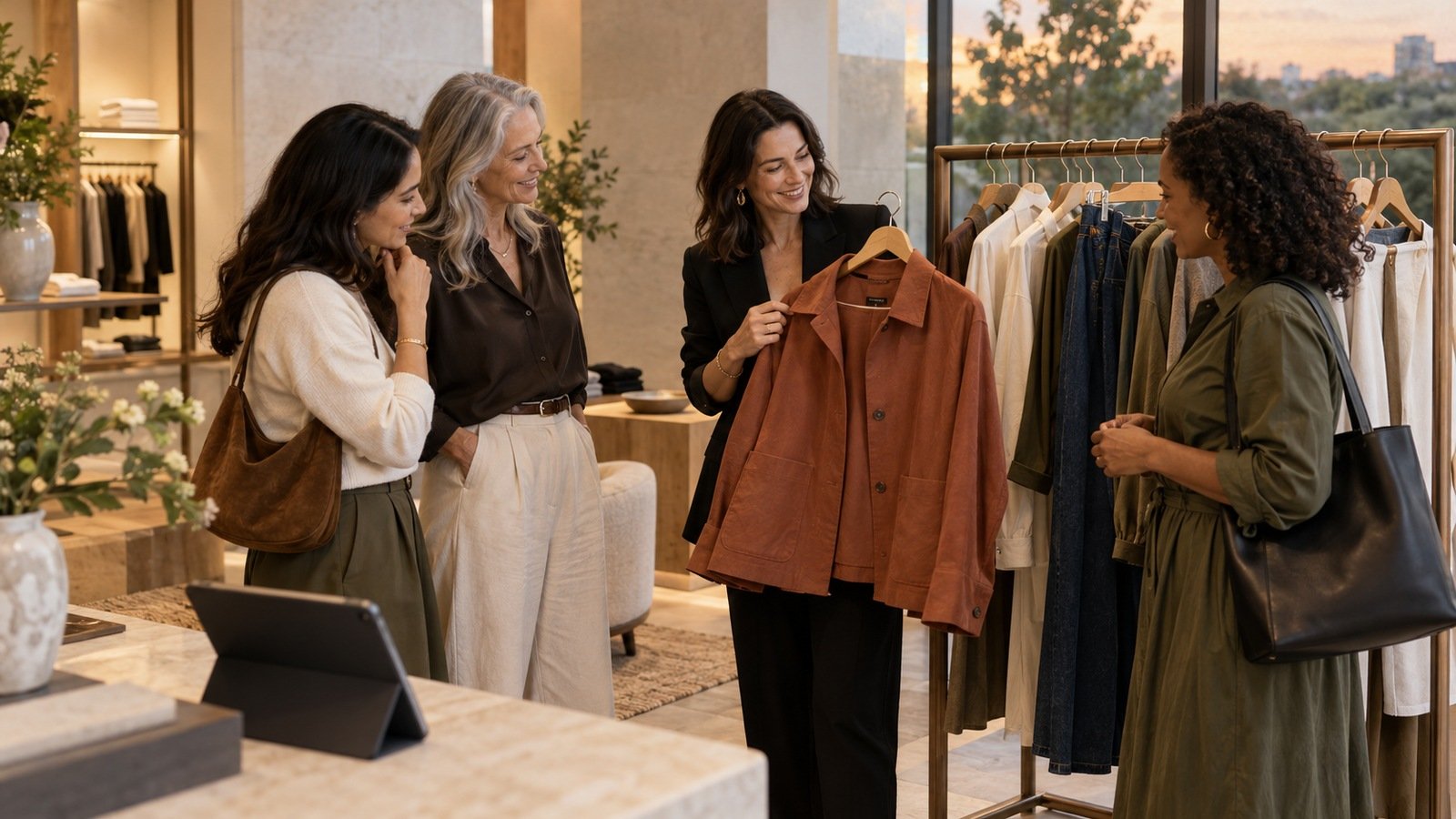
A customer who already knows your brand needs a reason to accept another invitation. A discount can be a reason to buy, but it does not explain why they should spend an evening with your team. A styling event needs a useful promise: discover a different way to wear a familiar category, explore a new silhouette or leave with a considered shortlist.
Virtual try-on can be evaluated as one optional part of that hosted experience. For CRM, retail marketing, community and CX leaders, the decision is whether a personal garment preview helps guests explore the collection and makes the next conversation more relevant. This guide proposes a bounded iKawn Mirror event test, from invitation to follow-up. It does not claim that Mirror increases retention.
Why existing-customer events deserve a specific brief
The Business of Fashion and McKinsey’s State of Fashion 2026, published November 17, 2025, describes a shift toward meaningful brand relationships in its Wellbeing Era chapter. Its recommendations include exclusive community activations as part of a higher-touch brand experience. See printed pages 76 and 115, corresponding to viewer pages 74 and 113 in the report PDF. These are market observations and recommendations, not evidence about a Mirror deployment.
There is also a current retailer example. LuxExperience’s September 16, 2026 results release reports 14 Top Customer activations and six exclusive experiences at Mytheresa during its fourth fiscal quarter ended June 30, 2026, including experiences with Zimmermann, Dolce & Gabbana and Brioni. This illustrates investment in existing-customer experiences at one luxury retailer. It does not establish virtual try-on use, prove those events caused commercial growth or provide an attendance benchmark for your stores.
Our practical interpretation: before allocating an event budget, decide what an existing customer will gain from attending. Mirror is worth evaluating when visual exploration serves that purpose. If the evening is primarily a repair workshop, a designer conversation or a fabric demonstration, spend on delivering that experience first.
Start with the guest promise and the customer group
Choose a group with a shared, relevant styling question. For example, customers who have expressed interest in occasion dressing could be invited to a hosted session exploring alternative jacket shapes. Use preferences your team is permitted to use; do not infer personal circumstances from a purchase.
Write the invitation around the service: what guests will explore, who will help and what they can take away. Explain that the visual preview is optional. Avoid promising a saved image, automatic lookbook or personalised digital follow-up until the proposed setup has demonstrated that capability.
- Guest purpose: a specific styling question that the collection can answer.
- Useful takeaway: a product shortlist, a physical fitting or a follow-up appointment chosen by the guest.
- Commercial question: whether the event produces enough useful customer actions to justify its total cost and effort.
- Accountability: one event owner, with named colleagues responsible for invitations, product availability and follow-up.
An existing-customer event should not become another lead-capture exercise for people you already know. Confirm attendance through the retailer’s approved booking process. Keep event administration separate from permission to use images or send additional marketing.
Design a hosted flow that still works without the camera
A small-group event needs room for conversation and uneven arrival times. Give guests a reason to engage with garments while another person uses the preview. Keep the screen away from the centre of the room if participation would feel like a public performance.
- Welcome and orient. The host introduces the styling theme and available routes: discuss the collection, inspect garments, try a visual preview or move directly to physical fitting.
- Explore a curated edit. Use a limited selection that addresses the guest promise. Confirm sizes, prices and fulfilment before the event so an appealing look has a realistic next step.
- Offer a personal preview. Explain its limits and the agreed camera or photo process. Let the guest compare a few relevant options without pressure to produce shareable content.
- Return to the real product. Discuss the preferred garment, fabric, movement and fit. A simulated appearance does not verify size or comfort.
- Agree the takeaway. Record only the requested products or action through the retailer’s approved process. Clear the session before another guest participates.
Plan capacity from a rehearsal, not from a supplier’s fastest demonstration. Measure the complete cycle, including explanation, selection, handoff and reset. If a cycle takes six minutes, one station has a theoretical ceiling of ten sessions an hour before delays; this is arithmetic for planning, not a Mirror speed claim. Leave capacity for conversation and recovery, or stagger arrivals.
Keep a garment rail and ordinary styling advice available throughout. If a preview misrepresents colour, print or construction, stop showing that product. If the system is unavailable, the event should still deliver its promised service. A host should be able to attend to guests while a separate colleague handles technical recovery.
Make follow-up a continuation of the guest’s choice
Before a guest leaves, ask which next step would be useful. A requested product link, a fitting appointment and no follow-up are all legitimate outcomes. Agree the channel and timing rather than putting every attendee into the same sales sequence.
For an initial test, a colleague can record approved product identifiers and the guest’s chosen action in the retailer’s existing system. Mirror should not be assumed to provide event booking, CRM synchronisation, image storage, social sharing or automated outreach. Demonstrate and scope each additional connection separately.
Set a deadline for the event owner to reconcile requests and stock availability. If an item is no longer available, give an accurate answer instead of sending a generic campaign. Keep photo participation, image reuse and marketing preferences separate, and confirm capture, retention and deletion behaviour for the proposed deployment before guests arrive.
Where the relationship needs an individual consultation, move it into your normal clienteling appointment workflow. The event creates an opportunity for that next conversation; it should not promise to complete every guest’s purchase decision on the night.
Judge the event and the Mirror component separately
Agree the review before invitations go out. Otherwise a busy room, a queue or a collection of attractive previews can become the definition of success. Track the whole invited group as well as participants so you can see where interest was lost.
- Invitation and attendance: invitations delivered, acceptances and attendance, with reasons for declines where volunteered.
- Useful product actions: requested shortlists, physical fittings and agreed appointments. Count people as well as actions to avoid inflating activity.
- Service quality: waiting time, declined previews, unsuccessful sessions, guest feedback and staff recovery time.
- Follow-through: requested actions completed, relevant purchases and retained contribution after the appropriate returns period.
Cost the complete evening: preparation, customer outreach, staff time, venue or equipment, software, support and follow-up. Ask the supplier to separate reusable setup from event-specific charges and confirm cancellation or rescheduling terms. A retention budget should not conceal the workload transferred to store teams.
If you need to isolate Mirror’s contribution, compare otherwise similar event sessions with and without the preview offer, using a fair allocation of eligible guests and consistent invitations, products, staffing and promotions. Comparing eager preview users with everyone else introduces selection bias. If the group is too small for a reliable commercial conclusion, report operational learning and guest feedback instead.
Repeat purchase requires a longer observation period suited to the category. A later order is not automatically caused by the event, and the event’s effect is not automatically Mirror’s effect. Set a bounded next commitment: repeat only if the guest promise was delivered, requested follow-up was completed and the additional experience justified its cost or answered a defined pilot question.
Bring the event brief to an iKawn Mirror demo
iKawn Mirror provides a virtual try-on experience for fashion discovery. For this use case, evaluate it as an optional garment-exploration station within a hosted customer event. Bring the intended guest group, styling theme, representative collection, space, expected arrival pattern and desired takeaway.
Ask to see the full guest cycle, an unsuitable garment result, a declined camera session and a reset between guests. Confirm who owns setup, support and the handoff to your retail systems. The Mirror brand-activation guide covers the broader campaign context; this decision is whether a specific existing-customer invitation merits an event pilot.
The demo should help your CRM and store teams decide whether Mirror adds useful styling service to the evening.