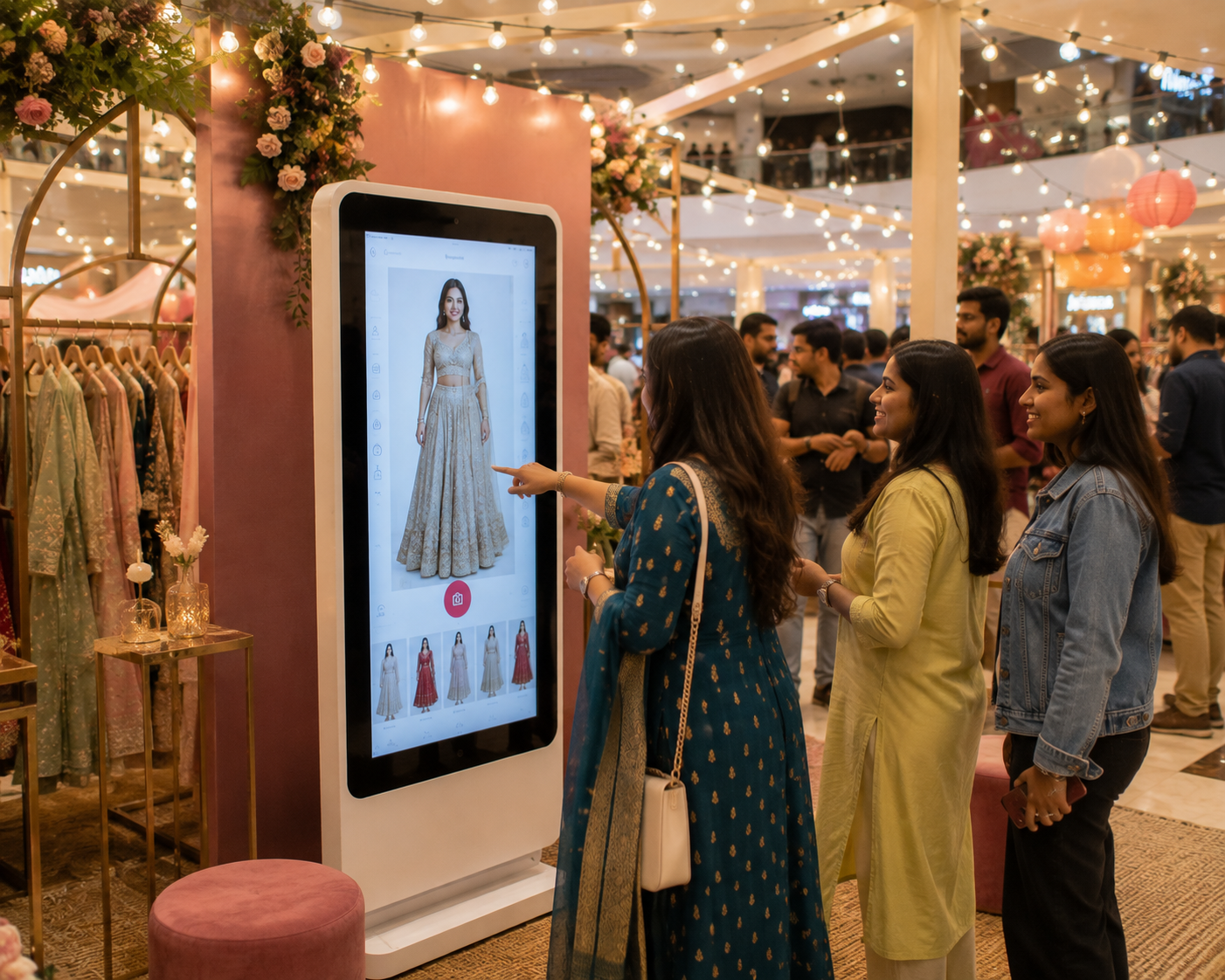
For brand activations, iKawn Mirror turns a fashion campaign into a shopper participation moment. It is strongest for launches, pop-ups, mall events, and sponsored retail experiences where the garment set, creative direction, consent path, and follow-up are planned before launch.
A fashion activation works when shoppers participate, not just when they look at a display. Virtual try-on can turn a launch, pop-up, or mall event into a product discovery moment if the garment set and follow-up path are planned tightly.
iKawn Mirror should be scoped around the campaign objective: the collection being promoted, the venue, the expected session length, the staff role, and what the shopper should do next.
For brand activations, iKawn Mirror turns a fashion campaign into a shopper participation moment. It is strongest for launches, pop-ups, mall events, and sponsored retail experiences where the garment set, creative direction, consent path, and follow-up are planned before launch.
How to use Mirror in a campaign
A good activation needs a sharper scope than a permanent store rollout. The garment set should be small enough to browse quickly, the creative direction should match the campaign, and the CTA should be clear.
If the activation includes lead capture, sharing, or CRM handoff, those pieces should be scoped explicitly and implemented with consent. They should not be implied on public pages unless available in the actual deployment.
Campaign fit
Mirror is relevant when the campaign needs active participation rather than passive display. It can help shoppers engage with a collection in a physical venue.
The practical question for a buyer is how this translates into the store journey: what the shopper sees, what staff can support, what content must be prepared, and what decision the retailer wants after the try-on moment.
Key considerations:
- Product launches and capsule collections.
- Pop-ups and mall events.
- Sponsored fashion zones.
- Retailer and brand collaboration campaigns.
Creative and catalog scope
A strong activation needs the garment set, campaign creative, staff role, and shopper flow agreed before launch.
The practical question for a buyer is how this translates into the store journey: what the shopper sees, what staff can support, what content must be prepared, and what decision the retailer wants after the try-on moment.
Key considerations:
- Choose garments that suit the try-on use case.
- Avoid overloading a short event with too many SKUs.
- Define campaign copy, CTA, and handoff before installation.
Consent and follow-up
If a campaign collects leads, shares looks, or moves shoppers into a CRM flow, it must be implemented with consent and only after the product scope supports it.
The practical question for a buyer is how this translates into the store journey: what the shopper sees, what staff can support, what content must be prepared, and what decision the retailer wants after the try-on moment.
Key considerations:
- Do not claim social sharing unless supported.
- Do not claim lead capture unless scoped.
- Use the activation to create useful discovery, not only photo novelty.
How to evaluate this before a pilot
A strong pilot starts with a narrow use case and a clear store environment. It should prove whether shoppers understand the experience, whether selected garments remain faithful, and whether the retail team can move from visual exploration to a useful next action.
Evaluation checks:
- Define campaign objective, venue, duration, garment set, creative tone, and staff plan.
- Limit SKU count so the shopper can complete the experience within the event context.
- Confirm what is captured, stored, or shared before adding any follow-up flow.
- Prepare a fallback journey if crowd size, network, lighting, or garment loading creates friction.
What the pilot has to prove
The pilot should produce operational confidence, not only a visual demo. Retail teams should be able to start, reset, explain, and support the experience during realistic store conditions.
Proof points:
- Shoppers understand the experience without long explanation.
- Store teams can start, stop, reset, and introduce the flow cleanly.
- The catalog owner can refresh garments without breaking the retail journey.
Where expectations need to stay clear
The page should help a buyer understand where virtual try-on is useful and where normal retail judgment still matters. That clarity improves trust and reduces the risk of overpromising before a deployment is validated.
Boundaries:
- Virtual try-on supports discovery and preselection; it does not replace physical fabric feel.
- Complex drape, shine, transparency, and embellishment need garment-level validation.
- Do not publish conversion, accuracy, or revenue claims without measured deployment data.
Scope this for a real retail environment
Share the market, store format, garment category, launch timeline, and whether this is for a store pilot, mall activation, or campaign. iKawn can then map the right Mirror workflow and demo path.