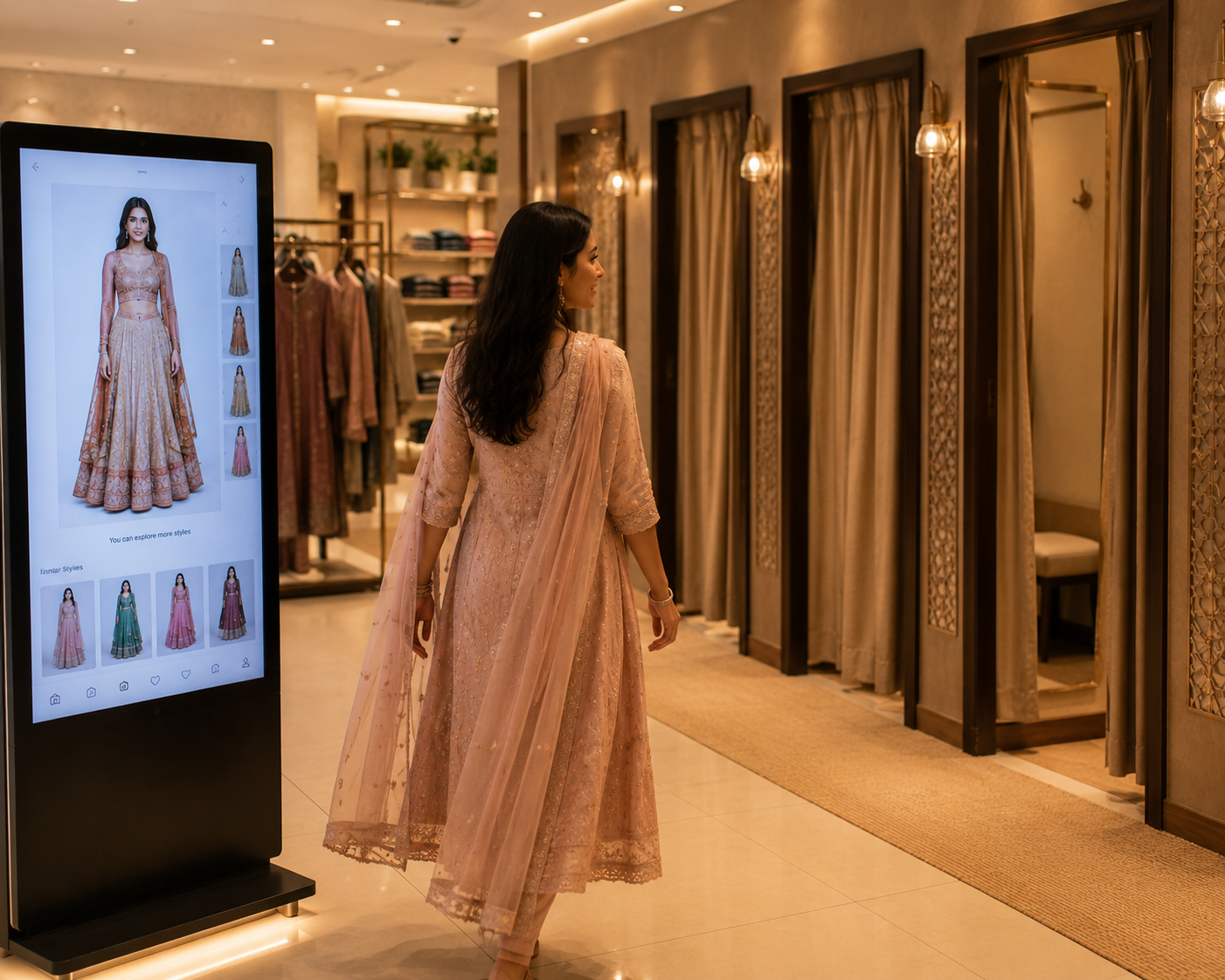
A virtual trial room should complement a traditional fitting room, not replace it outright. The virtual trial room helps shoppers browse, compare, and shortlist; the traditional fitting room remains strongest for physical fit, fabric feel, movement comfort, and final confidence.
A virtual trial room should not be sold as the death of the fitting room. The better retail argument is that virtual discovery can help shoppers create a stronger shortlist before they use physical fitting for final confidence.
This comparison explains how the two workflows can work together: virtual for browsing and preselection, traditional fitting for size, comfort, fabric feel, and final movement checks.
A virtual trial room should complement a traditional fitting room, not replace it outright. The virtual trial room helps shoppers browse, compare, and shortlist; the traditional fitting room remains strongest for physical fit, fabric feel, movement comfort, and final confidence.
How virtual and physical fitting workflows should work together
The combined workflow is usually stronger than either option alone. Shoppers can explore more looks virtually, then use the fitting room for items where fit, comfort, fabric, and movement matter most.
For store operations, the benefit is not eliminating fitting rooms. It is helping shoppers enter them with a better shortlist and helping associates guide choices more efficiently.
They solve different problems
A traditional fitting room is best for physical fit, fabric feel, comfort, and final confidence. A virtual trial room is best for browsing, shortlist building, and style exploration.
The practical question for a buyer is how this translates into the store journey: what the shopper sees, what staff can support, what content must be prepared, and what decision the retailer wants after the try-on moment.
Key considerations:
- Use virtual trial room discovery before physical fitting.
- Keep traditional fitting rooms for final certainty.
- Let associates guide the shopper between both steps.
Where virtual trial rooms help
Virtual trial rooms can reduce the effort of exploring many looks and can help shoppers consider options that are not all physically presented in front of them.
The practical question for a buyer is how this translates into the store journey: what the shopper sees, what staff can support, what content must be prepared, and what decision the retailer wants after the try-on moment.
Key considerations:
- Faster browsing across colors and styles.
- Visual exploration for larger catalogs.
- Useful support for queues, events, and high SKU assortments.
Where physical fitting still matters
Physical fitting still matters for exact size, tailoring, fabric feel, movement comfort, and purchase confidence for garments where fit risk is high.
The practical question for a buyer is how this translates into the store journey: what the shopper sees, what staff can support, what content must be prepared, and what decision the retailer wants after the try-on moment.
Key considerations:
- Do not remove the physical fit step where it matters.
- Use virtual try-on as a preselection layer.
- Be honest about drape and fabric limitations.
How to evaluate this before a pilot
A strong pilot starts with a narrow use case and a clear store environment. It should prove whether shoppers understand the experience, whether selected garments remain faithful, and whether the retail team can move from visual exploration to a useful next action.
Evaluation checks:
- Use virtual try-on before physical fitting to narrow options.
- Keep physical fitting for high-fit-risk garments and final confidence.
- Train associates to explain the difference between visual discovery and fit certainty.
- Measure queue pressure, shortlist quality, and assisted follow-up where possible.
What the pilot has to prove
The pilot should produce operational confidence, not only a visual demo. Retail teams should be able to start, reset, explain, and support the experience during realistic store conditions.
Proof points:
- Shoppers understand the experience without long explanation.
- Store teams can start, stop, reset, and introduce the flow cleanly.
- The catalog owner can refresh garments without breaking the retail journey.
Where expectations need to stay clear
The page should help a buyer understand where virtual try-on is useful and where normal retail judgment still matters. That clarity improves trust and reduces the risk of overpromising before a deployment is validated.
Boundaries:
- Virtual try-on supports discovery and preselection; it does not replace physical fabric feel.
- Complex drape, shine, transparency, and embellishment need garment-level validation.
- Do not publish conversion, accuracy, or revenue claims without measured deployment data.
Scope this for a real retail environment
Share the market, store format, garment category, launch timeline, and whether this is for a store pilot, mall activation, or campaign. iKawn can then map the right Mirror workflow and demo path.